 WonksAnonymous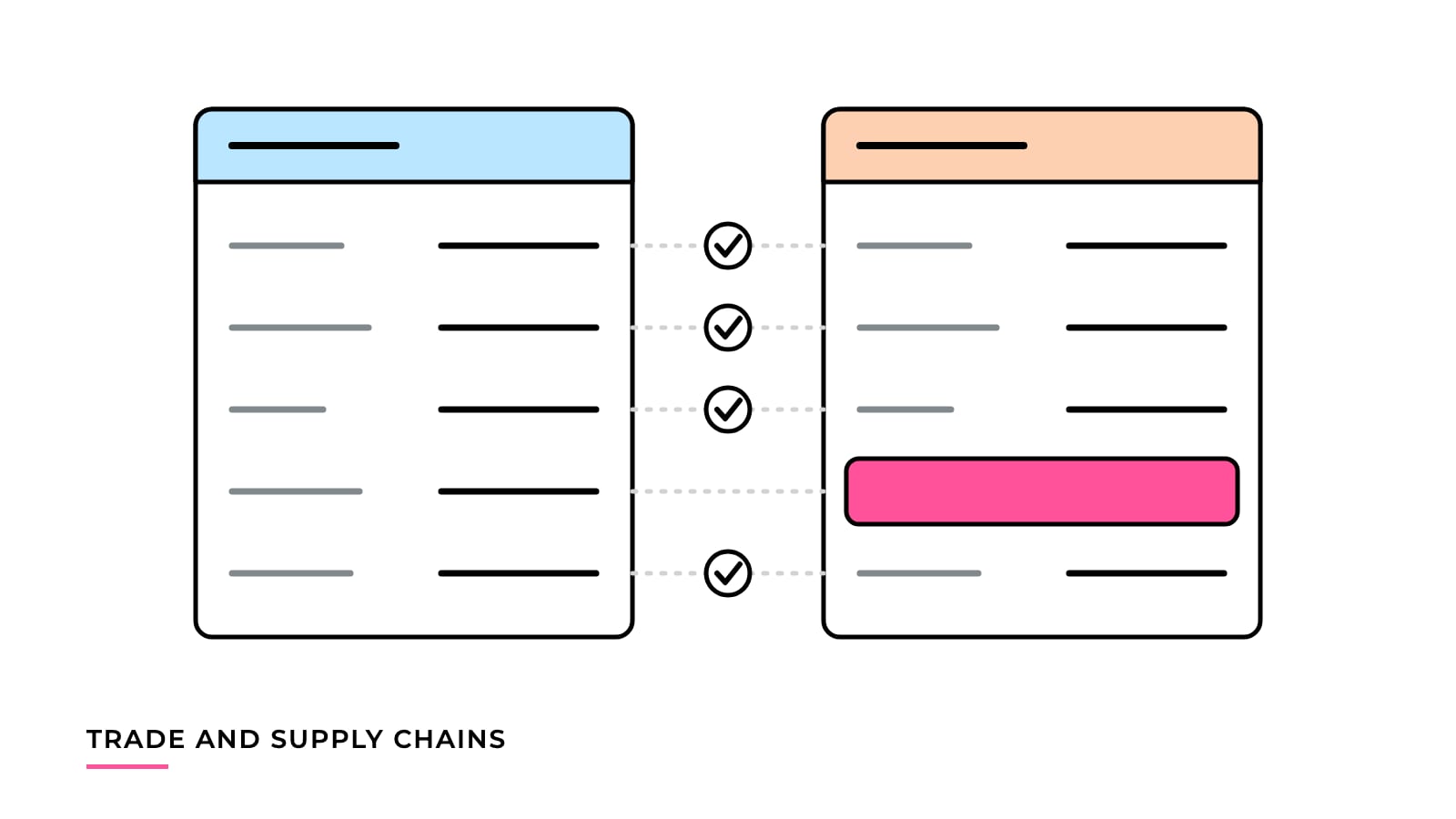
Comparing Packaging Machinery Quotes on a Like-for-Like Basis
A method and comparison table that put packaging machinery quotes on the same scope, so the lowest headline price is not mistaken for the lowest cost.
Three suppliers send three quotes for the same kind of machine, and the prices differ by 30 percent or more. The decision question is whether the lowest number is the lowest cost, or whether the quotes simply cover different things.
The short answer: put every quote on the same scope before you compare prices. Add each missing item at your own estimated cost, and the ranking can change. In the worked example below, the cheapest headline price ($72,000) becomes the second-cheapest normalized total, and a gap of $8,000 turns into a difference of $2,600 in the other direction.
Why quotes are hard to compare
A quote is a description of what the supplier will do for a price, and suppliers describe different things. Five differences cause most of the trouble.
Scope. One quote includes change parts for each pack format, factory acceptance testing, training and an initial set of spares. Another lists only the machine. Silence in a quote is not a zero, and it is not an inclusion either.
Trade terms. One price is ex works, another is delivered to your dock (see the ICC Incoterms rules). The freight, insurance and handling in between cost the same money whoever invoices them. See Imported Equipment Costs Beyond the Factory Price for how the terms move cost between buyer and seller.
Performance claims. A rated speed of 60 packs a minute does not say which product, which pack or which film it was measured on. A rated speed also does not say what the line around the machine can use, a point covered in Why Faster Machines Do Not Always Increase Line Output.
Acceptance terms. Some quotes define a pass in numbers, such as output and reject rate over a fixed run. Others say only that the machine will be “tested”.
Warranty, spares and service. Length of warranty, what it covers, who pays for travel and shipping of parts, and response times all vary, and none of them appear in the machine price.
Step 1: write your requirement sheet first
Do not let a supplier’s quote template define the job. Write a one- or two-page requirement sheet and send the same sheet to every supplier. It should state:
- the product and its relevant properties (size, weight, stickiness, fragility);
- pack sizes and formats, and how many you must run on day one and within two years;
- target good output per shift, not rated machine speed;
- packaging materials, including the film or container specification;
- utilities available at the site (voltage and phase, compressed air, water);
- upstream and downstream equipment the machine must connect to;
- standards your market requires, such as electrical and machine-safety rules;
- the language of manuals and software.
Ask each supplier to answer in your format, line by line. Where a supplier replaces a requirement with an alternative, the answer should say so.
Step 2: normalize scope with a table
Build one table with the same rows for every supplier. Each cell holds one of three entries: included, excluded, or priced separately with the amount. Then add every excluded item at your own estimate, marked as an estimate.
Typical rows:
- machine and options;
- change parts for each format;
- integration items (infeed, discharge, interfaces);
- freight and trade term;
- installation and commissioning days;
- training;
- factory acceptance test (FAT) and site acceptance test (SAT);
- documentation;
- initial spare parts;
- warranty length and what it covers;
- response times;
- software and remote support.
The formula is simple:
Normalized total = Headline price
                 + Items priced separately (supplier's figure)
                 + Items excluded (your estimate)
For the packaging installed-cost items your own site must cover whichever supplier you choose (utilities, layout, rigging), see The True Installed Cost of Packaging Automation. Those costs are the same across suppliers and can be left out of the comparison, unless a supplier’s design changes them.
A worked example
Illustrative numbers, not a quote, benchmark or customer result. Suppliers A, B and C are anonymous letters, not real companies.
Requirement: three pack formats (the first format’s tooling comes with the machine), delivered to your dock, five commissioning days, operator training, a FAT and an initial spare parts set.
Your estimates for items a quote leaves out: change parts for two extra formats $2,300, freight to site $2,500, commissioning at $1,000 per day, training $1,200, FAT cost (travel and test material) $1,300, initial spares $1,500.
| Row | Supplier A | Supplier B | Supplier C |
|---|---|---|---|
| Headline price | $72,000 | $80,000 | $95,000 |
| Change parts, two extra formats | Priced separately $2,800 | Included | Included |
| Freight to site | Excluded (ex works), estimate $2,500 | Included | Excluded, estimate $2,500 |
| Commissioning, 5 days | Priced separately: 5 days at $1,200 = $6,000 | 3 days included; 2 extra days at $1,000 = $2,000 | Included |
| Training | Excluded, estimate $1,200 | Excluded, estimate $1,200 | Included |
| FAT | Excluded, estimate $1,300 | Included | Included |
| Initial spares | Excluded, estimate $1,500 | Priced separately $1,500 | Included |
| Added to headline | $15,300 | $4,700 | $2,500 |
| Normalized total | $87,300 | $84,700 | $97,500 |
The arithmetic, line by line:
A: $2,800 + $2,500 + $6,000 + $1,200 + $1,300 + $1,500 = $15,300
   $72,000 + $15,300 = $87,300
B: $2,000 + $1,200 + $1,500 = $4,700
   $80,000 + $4,700 = $84,700
C: $2,500
   $95,000 + $2,500 = $97,500
The headline order was A, B, C. The normalized order is B, A, C. Supplier B is now $2,600 below A ($87,300 - $84,700), where it was $8,000 above on headline price. The gap between B and C narrows from $15,000 to $12,800 ($97,500 - $84,700).
Nothing here says B is a better supplier. The table ranks scopes at your estimated prices. It says nothing yet about performance, warranty or reliability.
Step 3: compare performance on the same basis
Ask every supplier for speed and reject rate on your product and pack, shown in a sample test or FAT. Measure good packs over a fixed run time, for example 60 minutes, with the same material in each test. A rated speed on a different product is not a comparison.
Then turn differences into cost with cost per good pack; the method is in Cost per Good Pack: A More Useful Measure Than Nameplate Speed. A simple version for rejects:
Packs run = Good packs needed / (1 - reject rate)
Rejects   = Packs run - Good packs needed
Annual reject cost = Rejects x material cost per pack
Illustrative: 1,200,000 good packs a year, material and product lost per rejected pack $0.10, reject rates measured in the test of 4 percent (A), 2 percent (B) and 1 percent (C).
| Supplier | Reject rate | Rejects per year | Annual reject cost (rounded) |
|---|---|---|---|
| A | 4% | 1,200,000 / 0.96 - 1,200,000 = 50,000 | $5,000 |
| B | 2% | 1,200,000 / 0.98 - 1,200,000 = 24,490 | $2,450 |
| C | 1% | 1,200,000 / 0.99 - 1,200,000 = 12,121 | $1,210 |
On these assumptions A costs about $2,550 a year more than B in rejects ($5,000 - $2,450), which widens B’s lead. Reject cost is one term. Speed differences, downtime and labor belong in the same per-good-pack view.
Step 4: acceptance and payment terms
Define acceptance in writing before you sign:
- the output required, as good packs over a stated run time;
- the maximum reject rate, and how rejects are counted;
- the product, pack and material used in the test;
- the run duration, long enough to show stable running rather than a good first ten minutes.
Tie payment milestones to those tests, for example a deposit with the order, a payment after FAT, a payment on delivery, and a retention held until SAT passes. Settle in the contract who pays if a test fails: repeat travel, re-test, and the cost of waiting. The size of the retention and the legal wording are for you to negotiate, with your own legal review.
Step 5: costs that arrive after delivery
The purchase price is one slice of the total. Ask each supplier for:
- prices and lead times for wear parts and the recommended spares list;
- service rates per day, travel and accommodation rules, and response times;
- consumables the machine needs, such as ribbons, blades or seals, and their prices;
- software update policy and whether remote support carries a fee after the warranty ends.
These items rarely change the first-year ranking in a big way, but over years they can. For converting a total cost into a payback figure, see Automation Payback, ROI and TCO: What Each Metric Tells You.
When the conclusion changes
The table changes if your estimates are wrong. If you already hold spares, your own technicians commission machines, or you ship freight in your own truck, the excluded items may cost far less than assumed. If a supplier’s design needs a different utility connection or conveyor, site costs are no longer equal. Where quotes mix currencies or trade terms, normalize those first; the Trade and Supply Chains index has related analysis.
Checklist
- Requirement sheet written first and sent unchanged to every supplier.
- Every quote entered in the same table, with every row filled in.
- Excluded items priced at your own estimate, labeled as estimates.
- Trade term and delivery point identical across quotes.
- Speed and reject rate measured on your product, in good packs over a fixed time.
- Acceptance criteria and payment milestones in writing.
- Spares, service rates, lead times and consumables priced.
- Reference check and sample test done on the supplier with the lowest normalized total.
The lowest normalized total still needs a reference check and a sample test. The model ranks scopes at your estimated prices. It does not judge supplier reliability, and this site does not recommend suppliers.
Keep reading
- The True Installed Cost of Packaging Automation: the site, integration and ramp-up costs that apply whichever quote you accept.
- Imported Equipment Costs Beyond the Factory Price: how trade terms shift freight, duty and service costs between buyer and seller.
- Cost per Good Pack: A More Useful Measure Than Nameplate Speed: how to turn test results into a comparable cost per sellable pack.
Assumptions and limits
- All dollar amounts, reject rates and volumes are illustrative. They are not quotes, benchmarks or typical market prices.
- Missing items are priced with the buyer’s own estimates, which may be wrong. Rerun the table when real prices arrive.
- The model ignores taxes, financing, the time value of money, ramp-up and residual value.
- Warranty length, response times and software support are compared as text. They are not priced in the example.
- It ranks scopes and costs, not supplier reliability, and it does not recommend any supplier.
- It is for comparison. It does not replace financial, legal, safety or engineering review.
Sources
- International Chamber of Commerce, Incoterms rules